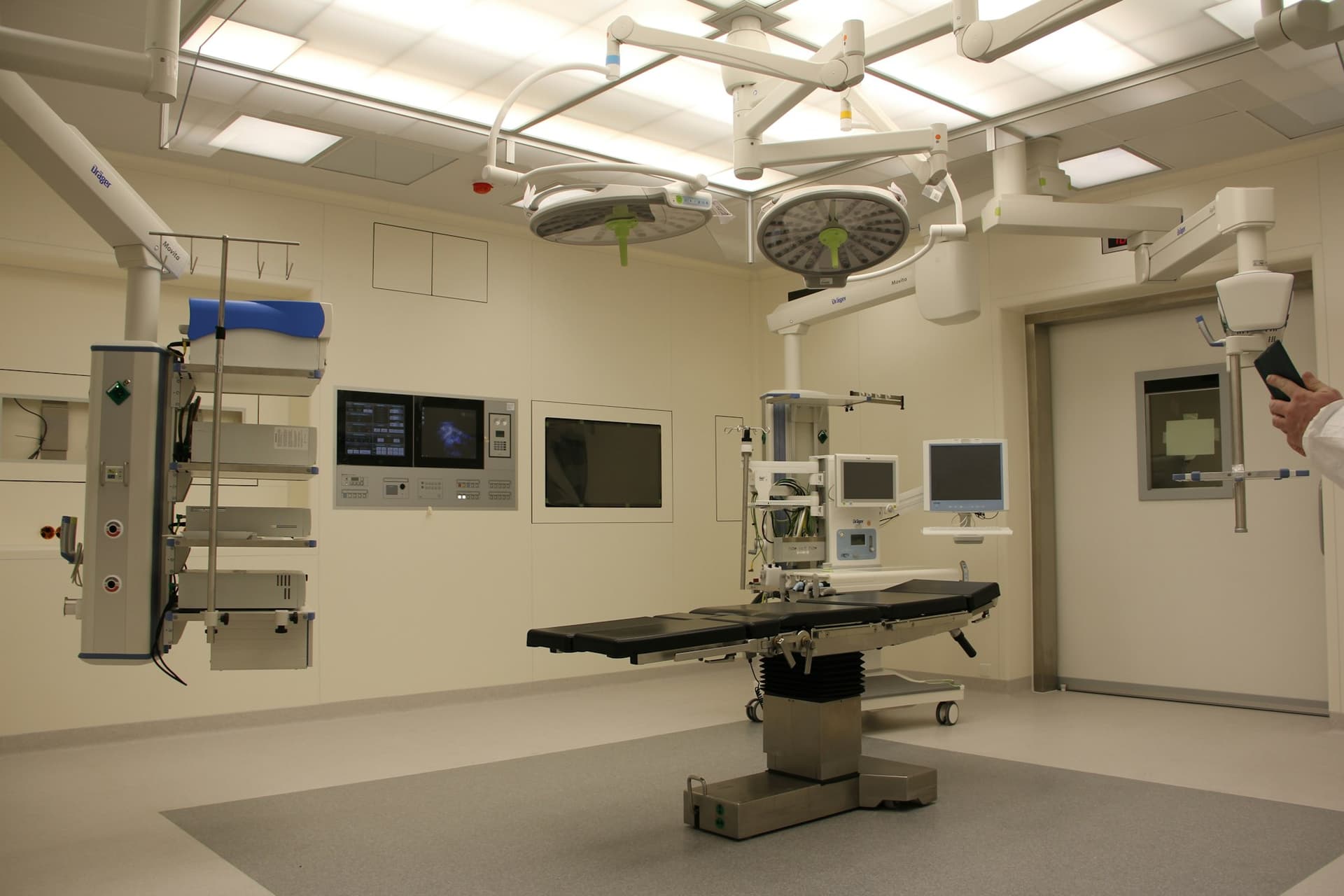
HMIS and clinical AI are converging as hospitals move from fragmented spreadsheets and legacy modules to unified digital operations. A Hospital Management Information System (HMIS) orchestrates OPD, IPD, diagnostics, pharmacy, billing, and reporting — the operational backbone of modern care delivery. Clinical AI adds intelligent assistance: documentation support, routing, coding suggestions, and analytics — when governed by clear human authority and audit trails.
QuantaloomAI built HMIS Pro to prove that clinical software can feel fast, accountable, and AI-ready without sacrificing the gravity healthcare demands. Digitizing hospital operations is not a single go-live event; it is a phased migration of workflows, data, and trust.
Why hospital operations resist digitization
Healthcare institutions accumulate parallel systems: registration desks, lab interfaces, billing counters, and ward whiteboards that "work" because staff heroics fill the gaps. Digitization fails when software ignores how clinicians actually move through a day — clicks multiply, handoffs break, and AI features feel like surveillance instead of support.
Successful HMIS programs align three forces:
- Operational truth — one patient identity, one schedule, one bill
- Role-aware UX — interfaces tuned for nurses, registrars, lab techs, and finance
- Governed intelligence — AI that assists within scope, with logs and overrides
HMIS foundations before clinical AI
Clinical AI without a solid HMIS layer amplifies chaos. Foundations include:
Unified patient and encounter model
OPD visits, admissions, procedures, and discharges should reference consistent encounters. AI documentation and coding tools need this context to suggest relevant actions — not hallucinate parallel histories.
Lab, pharmacy, and revenue cycle integration
Diagnostics and billing errors create more operational drag than any chatbot saves. HMIS Pro integrates labs, orders, and revenue cycle management so AI features sit atop reliable transactions, not duplicate entry points.
Permissions and accountability
Every action — human or AI-suggested — maps to a role, timestamp, and audit record. Clinical environments require non-repudiation: who ordered, who approved, who overrode.
Our healthcare AI work starts with these HMIS primitives before layering models.
Where clinical AI helps hospital operations
Used with discipline, clinical AI reduces administrative load and surfaces patterns humans miss:
Documentation and coding assistance
Structured note templates, code suggestions, and missing-field prompts accelerate billing readiness. Outputs remain drafts until clinician confirmation — never silent commits to the legal record.
Operational routing and capacity
AI can forecast OPD peaks, suggest bed assignments, or flag delayed lab turnarounds. These are decision-support features with visible confidence, not autonomous schedulers.
Quality and utilization analytics
Aggregate trends — readmission risk bands, bottleneck stages, revenue leakage — help administrators allocate resources. Analytics stay within privacy boundaries and role-based access.
Patient communication (within policy)
Appointment reminders, prep instructions, and follow-up nudges reduce no-shows. Content must be templated, localized, and auditable — not free-form model improvisation for clinical advice.
Governance patterns for HMIS and clinical AI
Healthcare buyers ask hard questions. QuantaloomAI implements:
- PHI minimization in model prompts and logs
- Human-in-the-loop for orders, codes, and patient-facing messages
- Source attribution when retrieval grounds policy or protocol answers
- Environment separation for training vs production data
- Incident runbooks for model outages — manual workflows must continue
These patterns mirror our broader healthcare AI compliance guidance for product teams.
Digitization roadmap: phased, not big-bang
Hospital operations digitize safely in waves:
1. Core HMIS — registration, scheduling, billing, lab interfaces 2. Department adoption — ward workflows, pharmacy, inventory with super-user champions 3. Analytics layer — operational dashboards executives use weekly 4. Clinical AI assists — documentation, routing, and coding support with evals 5. Continuous improvement — feedback loops from frontline staff, not only IT tickets
Each phase has exit criteria: error rates, training completion, and time-on-task metrics. Skipping phases to "launch AI" creates backlash from clinical staff.
UX that clinical teams will actually use
Hospital staff tolerate zero friction on bad days. Interfaces must be:
- Fast on low-bandwidth hospital networks
- Legible under ward lighting and time pressure
- Explicit about AI-generated vs human-entered fields
- Forgiving with undo, drafts, and offline-tolerant flows where possible
QuantaloomAI applies brand and interface systems so complex HMIS surfaces feel coherent — not a patchwork of vendor modules.
Measuring success beyond go-live
Digitization wins show up in operational metrics:
- Reduced duplicate data entry and billing rework
- Shorter patient wait times at registration and discharge
- Faster lab-to-result visibility for attending physicians
- Lower revenue leakage from coding and charge capture gaps
- Higher staff satisfaction scores on IT tools — the ultimate adoption signal
Clinical AI contributions appear as incremental gains on these baselines — minutes saved per note, fewer coding denials — not vanity chat engagement stats.
Building for the long term
HMIS and clinical AI are infrastructure investments measured in years. Choose partners who ship maintainable code, document data models, and plan for model provider changes without rewriting the hospital stack.
QuantaloomAI combines HMIS platform engineering with governed AI layers so hospitals digitize operations once — and evolve intelligence without starting over.
*Written by Sharjeel Ahmed, QuantaloomAI. Digitizing hospital operations or exploring clinical AI on HMIS? Book a briefing or email hello@quantaloomai.com.*