Healthcare AI promises faster documentation, smarter triage, and operational relief for understaffed clinical teams. It also introduces obligations that generic SaaS rarely faces: PHI boundaries, auditability, minimum necessary access, and workflows where model errors can harm patients or violate trust. Building HIPAA-aware clinical systems means designing AI as accountable infrastructure — not as a chat box pasted onto legacy software.
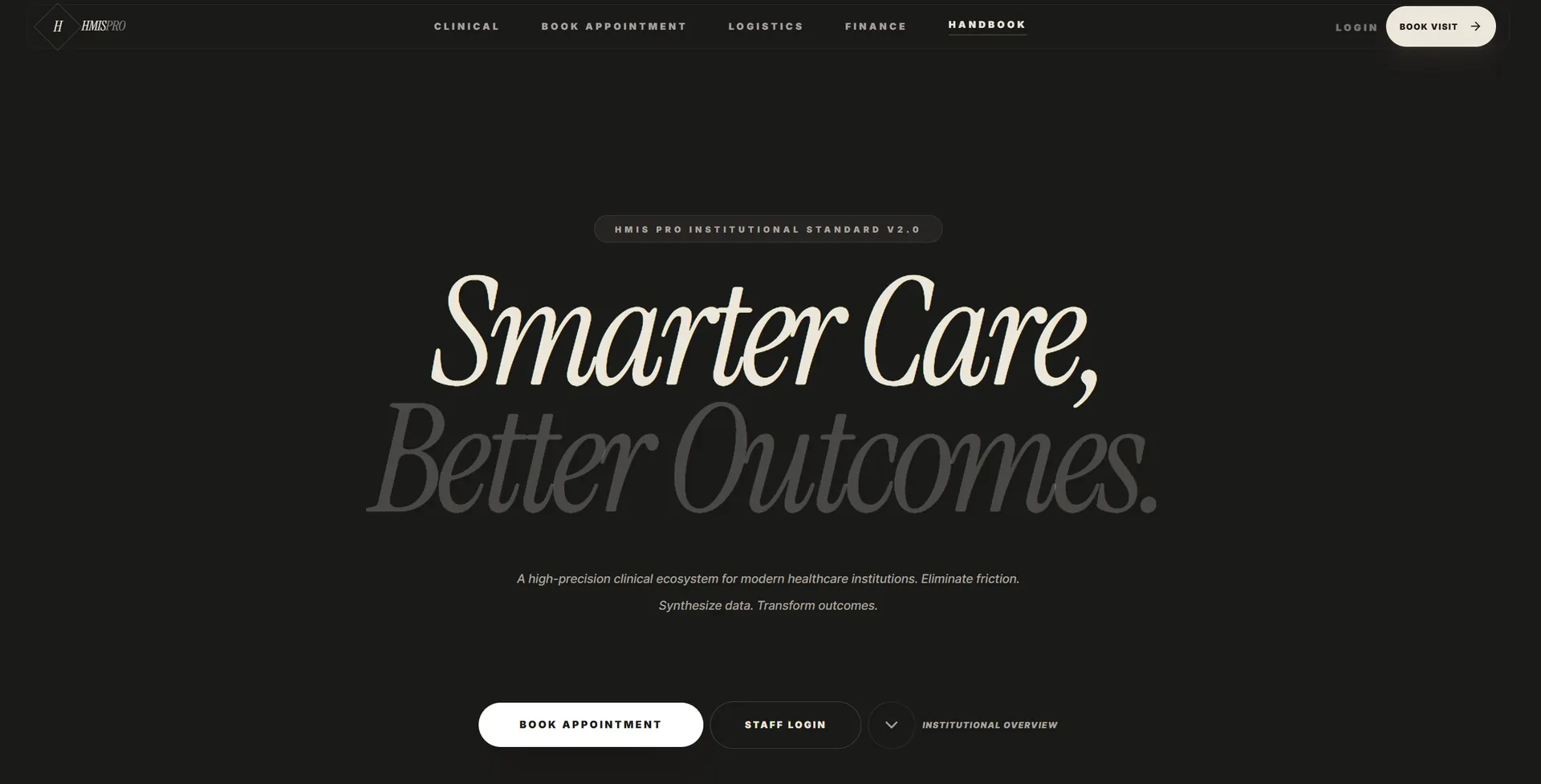
QuantaloomAI ships clinical and operational platforms where AI assists within strict guardrails. Our work on HMIS Pro — a unified clinical ecosystem spanning OPD, IPD, labs, and revenue cycle — reinforced a core lesson: healthcare AI succeeds when compliance, UX, and engineering are one conversation from day one.
Why generic AI stacks fail in clinical environments
Off-the-shelf copilots often lack tenant isolation, role-based PHI controls, and immutable audit logs. They may send data to models without Business Associate Agreements, retain prompts against policy, or produce outputs clinicians cannot trace to source records.
Clinical buyers should scrutinize:
- Where PHI is processed, stored, and logged
- Which subprocessors touch data and under what agreements
- Whether outputs are suggestions vs. system-of-record writes
- How access is scoped by role, department, and encounter context
- What happens during model outages — manual fallback must exist
HIPAA-aware design starts with data classification, not model selection. If a workflow does not require PHI, keep it out of the LLM context entirely.
Architecture for HIPAA-aware healthcare AI
Production clinical AI typically separates layers:
Context assembly with minimum necessary rule
Retrieve only fields required for the task — not entire charts by default. Use structured filters: patient ID, encounter ID, active problems, recent labs relevant to the query. Log what was retrieved and why. Redact identifiers from logs used for debugging; store trace IDs that map to secured audit tables.
Model routing and BAA coverage
Route PHI only through environments covered by BAAs with your cloud and model providers — or keep inference inside your VPC with approved deployments. Document model versions, retention settings, and training opt-out policies. For some tasks, smaller on-prem or private endpoints beat public APIs even at higher infra cost.
Human attestation for clinical actions
AI drafts; humans attest. Notes, orders, and billing codes that enter the legal record should require explicit clinician confirmation. The UI must show diffs between AI suggestions and final submissions. Never auto-sign clinical documentation without specialty-specific validation and institutional policy approval.
Pair these patterns with robust data engineering — HL7/FHIR integrations, normalized schemas, and pipeline alerts when source feeds stall. Bad upstream data hurts patients before any model runs.
UX patterns clinicians actually trust
Clinical UX fails when AI feels magical instead of accountable. QuantaloomAI implements:
- Source-linked suggestions: draft text cites note sections, lab values, or protocol documents
- Confidence and conflict states: flag when retrieved data is stale or contradictory
- Role-aware interfaces: nurses, physicians, and billing staff see scoped actions
- Interruptible flows: emergencies override AI queues; the system resumes safely afterward
- Plain-language error states: "Cannot suggest without recent renal function — order missing"
Trust grows when the interface answers: what did the system know, what did it assume, and who approved the outcome?
Audit trails regulators and risk teams expect
HIPAA-aware clinical systems maintain immutable event logs: authentication, record access, AI invocation, retrieved fields, model version, human edits, and final sign-off. Logs should support forensic review without exposing PHI in aggregate monitoring tools.
Operational dashboards track:
- Rate of AI suggestions accepted vs. edited vs. rejected
- Time saved per encounter (sampled studies, not vanity metrics)
- Escalations due to missing data or policy blocks
- Security events: anomalous access, failed auth, export attempts
These metrics belong in governance reviews alongside clinical quality committees — not only engineering standups.
Safe use cases vs. high-risk experiments
Lower-risk starting points include operational automation: appointment reminders, prior-auth document assembly, coding suggestions with human review, and internal knowledge search over approved protocols. Higher-risk areas — autonomous diagnosis, unsupervised triage, pediatric dosing — demand specialty oversight, clinical trials, and often regulatory pathways beyond HIPAA alone.
We recommend phased rollout: shadow mode (AI proposes, humans work as usual), assisted mode (AI pre-fills with review), then limited autonomous steps with strict guardrails. Each phase expands only after eval metrics and incident reviews justify it.
Integrating AI into existing clinical platforms
Greenfield platforms like HMIS Pro can embed AI-native workflows from the start. Brownfield hospitals often integrate via:
- Read-only summarization over FHIR resources
- Sidecar drafting tools that paste into the EHR after review
- Ops automations (bed management alerts, supply triggers) without patient-facing dialogue
Our AI product development team maps integration paths against IT constraints — VPN access, HL7 feeds, single sign-on, and offline contingencies for low-connectivity wards.
Vendor diligence checklist
Before procuring healthcare AI, require:
- Signed BAA and subprocessors list
- Data flow diagrams with PHI boundaries
- Penetration test summaries and remediation status
- Model change notification policy
- Customer-controlled retention and deletion
- Eval evidence for your specialty — not generic benchmarks
Ask vendors how they handle prompt injection when users paste untrusted text into clinical notes. If the answer is vague, assume risk.
Building for the long clinical horizon
Healthcare AI matures when institutions treat it like clinical infrastructure: owned workflows, trained staff, incident response, and continuous evals as protocols evolve. QuantaloomAI partners with healthcare operators to ship HIPAA-aware systems that respect clinician judgment, protect patients, and improve throughput without hiding accountability.
The organizations that lead in 2026 will not be those with the flashiest demo — they will be those whose clinical AI survives audit, earns clinician adoption, and measurably reduces administrative burden while keeping humans in control of care decisions.
*Written by Sharjeel Ahmed, QuantaloomAI. Planning HIPAA-aware clinical AI? Book a briefing or email hello@quantaloomai.com.*