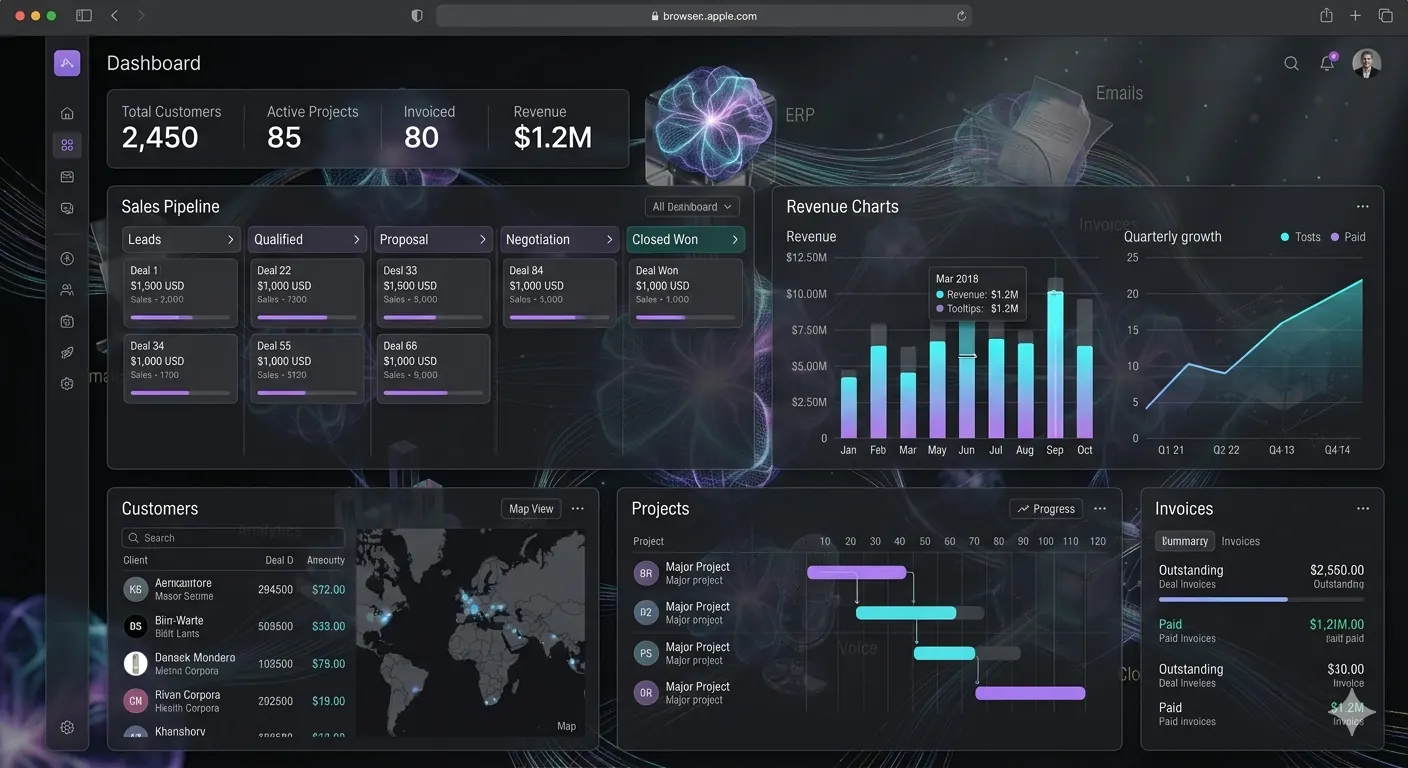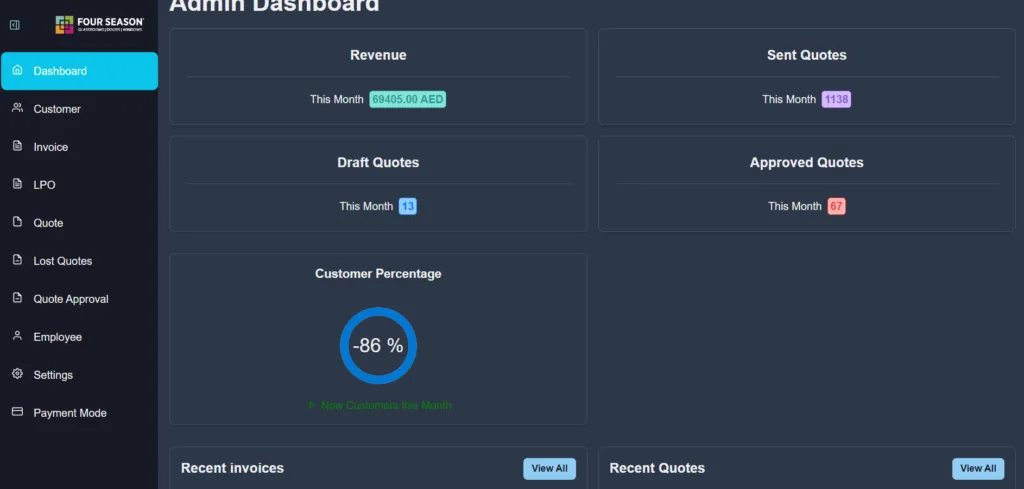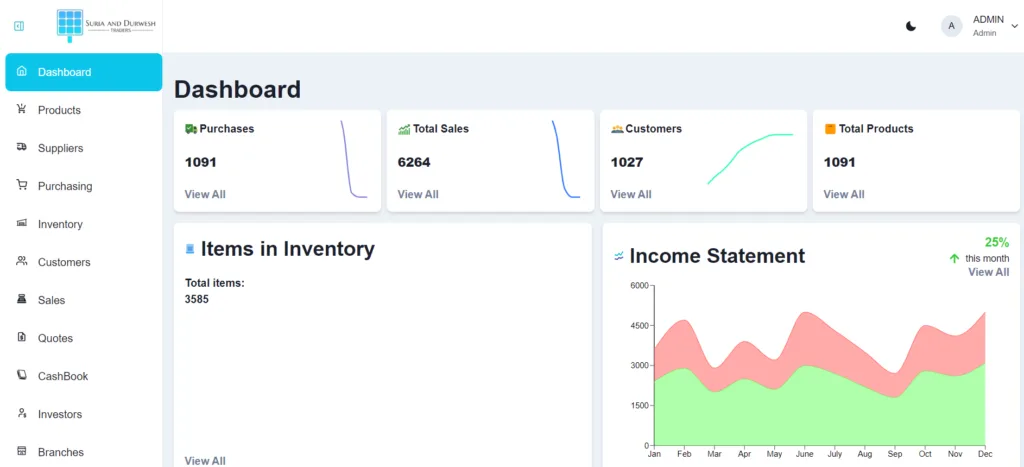
Integrating legacy ERP with modern AI workflows is not a rip-and-replace fantasy — it is bridge engineering. Your ERP holds inventory, GL entries, customer master data, and years of audit history. AI layers that ignore that gravity create shadow systems, duplicate records, and compliance exposure.
QuantaloomAI approaches ERP-AI integration as a workflow problem first. Which decisions can AI draft? Which writes require human approval? Which reads must be real-time versus nightly batch? Answering those questions before choosing models prevents the common failure mode: a brilliant copilot that nobody trusts because it once suggested a stock adjustment against locked period rules.
Mid-market manufacturers, distributors, and services firms often run ERPs with limited APIs, custom modules, and tribal knowledge in spreadsheets beside the system of record. AI success here means augmenting operators inside familiar surfaces — not asking them to live in a separate chat window disconnected from part numbers and credit holds.
The reality of legacy ERP and modern AI
ERP systems encode decades of business logic — fiscal period locks, approval hierarchies, UoM conversions, tax jurisdictions. AI must augment that logic, not override it through prompt wishful thinking.
Teams that succeed treat the ERP as the system of record and AI as a drafting, search, and exception-sorting layer. Teams that fail treat the ERP as a data export for a chatbot that eventually hallucinates inventory levels.
Ask before you build:
- Which workflows already have human approval chains we can mirror digitally?
- What entity keys are canonical across ERP, CRM, and warehouse systems?
- What audit evidence do finance and compliance require for AI-assisted transactions?
Integration patterns that respect the system of record
Read-heavy intelligence is the lowest-risk starting point: AI summarizes open orders, flags margin exceptions, or drafts customer emails from ERP plus CRM context without writing back. Value arrives quickly; blast radius stays small.
Human-approved writes cover the next tier: AI proposes purchase requisitions, credit memos, or production schedule changes; an operator reviews structured diffs; approved payloads post through idempotent APIs or controlled batch jobs. Never let an LLM call a write endpoint without schema validation and an approval event in the audit log.
Event-driven sync keeps AI context fresh. Webhooks, message queues, or scheduled ETL from ERP to a semantic layer power retrieval for agents. Stale inventory data causes confident wrong answers — worse than no AI at all. Our data engineering practice treats freshness SLAs as product requirements, not infra afterthoughts.
Unified CRM-ERP platforms demonstrate why consolidated data models simplify AI: when sales, stock, and billing share one schema, agents need fewer brittle joins. Even without full consolidation, a canonical entity map — customer ID, SKU, order line keys — across systems is non-negotiable.
Designing AI workflows around ERP constraints
Map workflows to existing roles. Buyers, planners, AR clerks, and warehouse supervisors already have muscle memory. AI should reduce keystrokes inside their paths — prefilled fields, exception sorting, natural-language search across transactions — rather than invent parallel processes.
Multi-agent patterns help when ERP tasks span domains: one agent gathers open PO and receipt data, another checks supplier scorecards, a supervisor routes a recommended expedite request to the right approver. Orchestration must log every agent step against ERP entity IDs for auditors. See our guide on multi-agent systems in production for orchestration discipline.
Encode business rules as deterministic checks after model output. The model proposes; code validates; humans approve exceptions. Prompts cannot reliably enforce fiscal period locks — code can.
Security, compliance, and auditability
ERP integrations touch financial and operational data subject to SOX, industry regulations, or internal control frameworks. Log who approved AI-suggested transactions, what inputs the model saw, and which API payloads posted. Retention policies should match ERP audit requirements — not default 30-day chat logs.
Role-based access must flow from ERP permissions into AI tools. An agent must not retrieve margin data for territories a user cannot already access in the native client. Service accounts need least privilege; break-glass procedures need documentation.
Test adversarial prompts against write paths before production. Can a user trick the agent into posting to the wrong warehouse or customer account? Treat prompt injection as an authorization bug, not a curiosity.
A practical roadmap for mid-market ERP + AI
Phase one: connect read-only semantic layer, ship search and summarization for one department, measure hours saved and error rates.
Phase two: introduce approved writebacks for one transaction type with full validation.
Phase three: expand agents across supply chain or finance with shared orchestration and executive analytics.
Choose integration partners who understand both ERP reality and production AI — not chatbot vendors who treat your GL as a CSV upload. QuantaloomAI workflow automation and AI product development teams ship ERP-adjacent systems with observability, rollback plans, and interfaces operators trust.
Legacy ERP is not a blocker to modern AI — it is the anchor. Build workflows that make the system of record smarter, safer, and faster to operate. That is how AI earns a permanent seat next to the screens your team already runs the business on.
*Written by Sharjeel Ahmed, QuantaloomAI. Book a briefing to plan ERP-AI integration.*