A multi-agent system is not a room full of chatbots — it is an orchestration layer where specialized AI workers handle distinct tasks, hand off context, and escalate when confidence drops. Production teams adopt this pattern when a single monolithic prompt cannot reliably cover research, validation, action, and reporting in one pass.
At QuantaloomAI, we deploy multi-agent architectures when workflows cross systems: a support agent that retrieves account history, a billing agent that checks policy, and a supervisor agent that decides whether to act or route to a human. The value is not parallelism for its own sake — it is separation of concerns with measurable behavior per worker.
The shift from demo to production happens when you can answer: which agent failed, what tool it called, what data it saw, and how long the full chain took. Without that visibility, multi-agent systems become harder to debug than the manual process they replaced.
Why multi-agent systems matter in production
Enterprise AI rarely fails because the model is too small. It fails because one prompt is asked to research, decide, execute, and report — with no boundaries between those roles. Multi-agent design assigns each role a scoped worker with explicit tools, permissions, and success criteria.
Common triggers for multi-agent adoption include:
- Cross-system workflows that touch CRM, ERP, ticketing, and knowledge bases
- Different permission levels per stage — read-only research versus approved writes
- Parallel validation where multiple sources must agree before action
- High escalation rates from monolithic agents that lose context over long threads
If your team already tracks which human role handles each step, you likely have a natural agent map waiting to be automated.
Multi-agent architecture patterns that survive launch
Three patterns cover most enterprise use cases.
Supervisor routing sends each request to a coordinator that picks a specialist — ideal for customer-facing flows with unpredictable intent. The supervisor maintains session state and rejects out-of-scope tool calls before they execute.
Pipeline chains pass structured output from one agent to the next — strong for document processing, underwriting, or clinical coding where stages are well defined. Each stage validates schema before the next agent runs.
Parallel fan-out runs researchers or validators concurrently, then merges results — useful for competitive analysis, multi-source verification, or compliance checks where independent reads reduce single-point bias.
Every pattern needs shared context boundaries. Agents should receive the minimum context required for their task, not the entire conversation history. Token bloat increases cost, latency, and hallucination risk. We pair agent design with data engineering so retrieval indexes, permissions, and freshness rules are enforced before any worker sees a document.
Tool access must be scoped per agent. A research agent reads CRM and knowledge bases; an action agent writes tickets or updates records — never both without an approval gate. Idempotent tools, retry policies, and explicit failure states prevent silent duplication when one worker retries while another succeeds.
The orchestration layer: routing, state, and handoffs
Orchestration is where multi-agent systems succeed or collapse. A production orchestrator tracks session state, agent assignments, tool results, and escalation reasons — not just message history. State machines beat ad-hoc prompt chains because they make illegal transitions impossible: an action agent cannot fire until a validation agent marks the payload approved.
Handoffs need structured schemas, not prose summaries. When Agent A passes work to Agent B, the payload should include entity IDs, confidence scores, source citations, and open questions — not a paraphrased paragraph that loses precision. JSON or typed objects reduce misinterpretation and make automated evals tractable.
Human-in-the-loop belongs in the orchestrator, not buried in a single agent's system prompt. Approval queues, diff previews, and one-click rejections should be first-class events the supervisor respects. Our workflow automation engagements treat the orchestrator as operational infrastructure with logs, owner alerts, and runbooks — the same discipline we apply to ops platforms like AutomateIQ.
Observability and evals for agent fleets
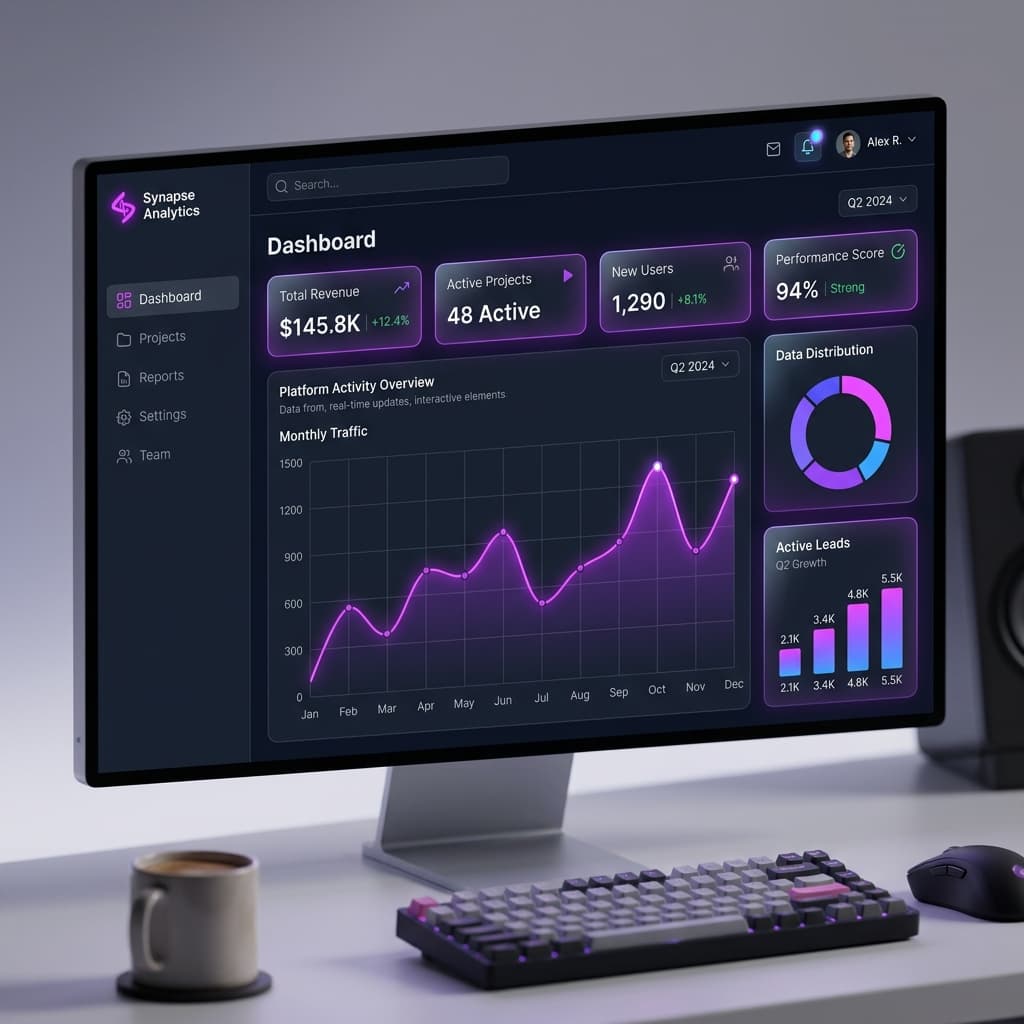
Multi-agent systems multiply failure modes. Instrument each hop: agent selected, tools invoked, tokens consumed, latency per step, and final disposition. Dashboards should answer which agent drives escalations and which tool causes timeouts — without reading full transcripts.
Eval suites must cover cross-agent scenarios, not isolated prompts. Test handoff integrity: does the billing agent receive the account ID the research agent found? Test conflict resolution: what happens when two parallel agents disagree? Test degradation: if retrieval fails, does the supervisor fall back safely or hallucinate?
Release gates should block deploys when end-to-end task success drops, even if individual agents score well in isolation. Regression in routing logic — sending refund requests to the sales agent — is invisible in single-agent evals but catastrophic in production.
When to adopt multi-agent systems — and when not to
Adopt multi-agent orchestration when workflows are multi-step, cross-system, or require different permission levels per stage. Skip it when a single retrieval-augmented prompt with two well-designed tools completes the task reliably — extra agents add latency, cost, and coordination overhead without benefit.
Start with one high-value chain: support ticket triage, invoice exception handling, or candidate screening with human approval. Score completion rate, escalation rate, and cost per outcome for four weeks before expanding the fleet. QuantaloomAI AI product development projects follow this narrow-first path on platforms from HR pipelines to clinical workflows.
Production multi-agent systems are operations software. They need charismatic interfaces that show what each worker is doing, evals that catch routing regressions, and orchestrators that respect human authority on high-stakes actions. That combination — not model count — is what turns AI workers into infrastructure your team trusts.
*Written by Sharjeel Ahmed, QuantaloomAI. Ready to orchestrate AI workers in production? Book a briefing or email hello@quantaloomai.com.*