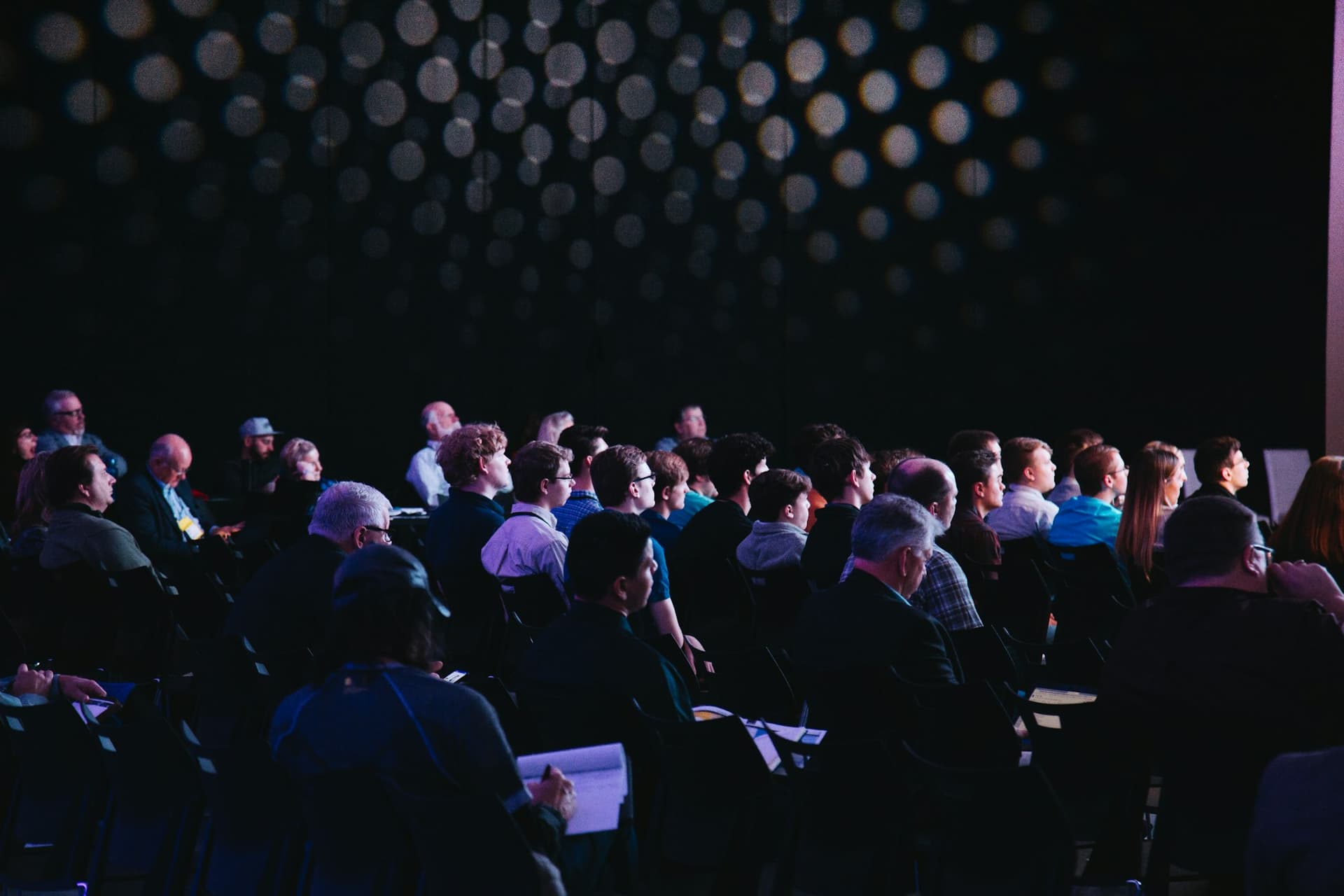
Event management platforms run some of the most complex short-duration operations in business — thousands of attendees, shifting schedules, sponsor deliverables, and staff coordinating across venues, apps, and inbox chaos. AI for summit and conference ops does not mean chatbots on the homepage; it means intelligent routing, document assembly, real-time alerts, and staff copilots that keep high-stakes events on rails when the agenda slips and the keynote runs long.
QuantaloomAI builds event software where automation respects operational gravity. Summit Connect — built for national medical conference operations — handles RSVP, schedules, exhibitors, and communications in one system. The lesson: conference AI succeeds when it reduces coordinator cognitive load without hiding who changed what, when, and why.
Why conference operations resist generic software
Summits and conferences combine traits that break generic project tools:
- Time-compressed intensity — errors in week one become crises in week zero
- Multi-stakeholder chaos — speakers, sponsors, registrars, AV crews, and executives with different priorities
- Public-facing failure — a wrong session time or lost RSVP is visible to thousands
- Document sprawl — run-of-show docs, exhibitor manuals, and legal riders versioned across email
Off-the-shelf event apps often cover registration but fail at orchestration: who gets notified when a room changes, how exhibitor leads flow to sales, how volunteer shifts adapt when flights delay speakers.
Event management platforms with embedded AI should own the coordination layer — not just the ticket.
AI patterns for summit and conference ops
Production event AI clusters into high-value workflows:
Intelligent RSVP and attendee routing
Parse registration intent — track preferences, dietary needs, credential levels — and route attendees to correct sessions, badge tiers, and communications. Flag incomplete registrations before arrival day. Surface waitlist logic with human approval for capacity exceptions.
Schedule intelligence
When sessions move, AI-assisted ops should propagate updates: mobile app notifications, signage queues, speaker briefings, and exhibitor impact analysis. Generate natural-language staff briefings from structured schedule diffs — not freehand summaries that omit room numbers.
Exhibitor and sponsor workflows
Automate lead capture routing, booth assignment checks, and deliverable reminders. Draft sponsor recap emails from session attendance metrics. Keep humans in the loop for contract-sensitive commitments.
Staff copilots for run-of-show
Coordinators query live state: "Which rooms still lack AV check?", "Who hasn't checked in on the keynote panel?" Copilots retrieve from authoritative systems — not hallucinate from last week's PDF.
Pair these patterns with workflow automation so webhooks, SMS gateways, and CRM writes are durable, logged, and recoverable when APIs flap mid-event.
UX for coordinators under pressure
Event staff operate in adrenaline mode. Interfaces must be:
- Glanceable — critical paths visible in one screen during show hours
- Action-oriented — every alert links to the fix, not a generic dashboard
- Auditable — schedule changes show author, timestamp, and downstream effects
- Offline-tolerant — venue Wi-Fi fails; local caches and SMS fallbacks matter
AI suggestions should read as proposals with accept/edit/reject — never silent mutations to public schedules.
Data, integrations, and single source of truth
Conference ops disintegrate when RSVP data lives apart from scheduling, badge printing, and mobile apps. Event management platforms need:
- Unified attendee profiles with session entitlements
- Integration to email, SMS, calendar, and mobile push
- Role-based views for coordinators, speakers, sponsors, and security
- Export paths for post-event analytics and CRM follow-up
QuantaloomAI's SaaS platform engineering practice builds these foundations so AI layers attach to clean data — not duplicate spreadsheets maintained by heroic volunteers.
Risk management for high-stakes events
Medical summits, government forums, and flagship user conferences carry reputational and safety stakes. Event AI should support:
- Credential verification workflows with explicit override logging
- Emergency broadcast templates with approval chains
- Data minimization for attendee PII in model contexts
- Runbooks when vendors fail — manual mode for registration desks and session checks
Treat AI as ops infrastructure with incident response, not as experimental garnish on the marketing site.
Measuring ROI on event AI
Quantify value beyond "we used AI":
- Coordinator hours saved on schedule churn weeks
- Reduction in inbound "where is my session?" contacts
- Sponsor lead delivery latency
- Registration completion rate improvements
- Post-event report generation time
These metrics justify platform investment to leadership better than novelty demos.
Building event platforms that last beyond one show
The best event management platforms become institutional memory — playbooks, vendor contacts, attendee segments, and template schedules that improve each year. AI accelerates reuse: draft next year's agenda from historical attendance, suggest speaker slots based on topic momentum, and pre-build exhibitor packages from prior conversion data.
QuantaloomAI partners with event operators to ship summit and conference systems that survive show day, earn coordinator trust, and scale from regional meetups to multi-track national programs — with humans always commanding the public experience.
*Written by Sharjeel Ahmed, QuantaloomAI. Planning AI for conference operations? Book a briefing or email hello@quantaloomai.com.*